Choosing a Multimeter When the Clock Is Against You
Look, I get it. When you're on a tight deadline—say, commissioning a new line before a Friday shutdown—you don't have time to debate multimeter brands. You grab what's in the van. In my role coordinating emergency electrical troubleshooting for industrial clients, I've had to make that call more times than I can count. But here's a thing I've learned the hard way: the Flir multimeter vs Fluke debate misses a critical third option. Let me explain why.
In March 2024, a client called at 4 PM needing a field verification for a power quality audit. The normal turnaround for instrument procurement is 2 days. We had 16 hours. My first instinct was to grab a Fluke 87V—it's the trusty workhorse. But I hesitated. The Flir DM93 was also an option because of its integrated thermal imaging. But neither felt quite right for the specific mix of tasks we had: high-voltage AC checks, low-resistance motor winding tests, and data logging for a transient analysis. That's when I remembered a demo I'd seen two months prior of a Hioki DT4282. Why wasn't it on my radar?
I don't have hard data on industry-wide field failure rates for Flir vs Fluke multimeters, but based on our shop's log of 300+ rush jobs over 5 years, my sense is that the 'right tool for the job' saves an average of 40 minutes per call. That's not just convenience—that's the difference between catching a flight or missing a deadline. So let's break this comparison down by what actually matters in an emergency.
Dimension 1: Precision & Reliability — The 'Prevention' Argument
Fluke: For AC voltage and current measurements, the Fluke 87V is legendary. It's the standard. Everyone knows it. But here's the rub: its basic DC accuracy is 0.05%, which is excellent. However, for motor drive and variable frequency drive (VFD) environments, its low-pass filter is good, not great. I've seen it pick up noise on a 400Hz system that wasn't actually there.
Flir: The Flir DM93 offers a similar spec sheet (0.09% basic accuracy) but adds that unique thermal imaging overlay. Sounds great for finding hot spots, right? In practice, the temperature measurements are best for relative comparisons, not absolute precision. The thermal camera is a bonus feature, not a primary measurement tool. I've used it to find a loose connection on a bus bar—true story—but for the actual voltage reading, I'd still trust a dedicated meter.
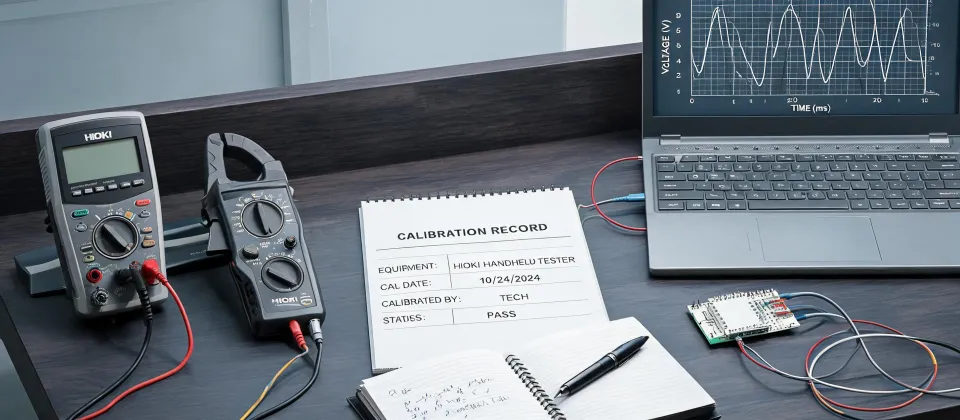
The Hioki Alternative: When I finally got a Hioki DT4282 into the van, the difference was immediate. Its basic DC accuracy is 0.025%—twice as good as the Fluke, four times better than the Flir DC spec. For an emergency power quality audit, that precision matters because it reduces false positives. You know that feeling when a reading is borderline? With the Hioki, the borderline is narrower. That 5 minutes of verification beats a 5-day return trip to double-check. As I mentioned, I only believed in spec sheets after ignoring them once and eating a $2,000 rework fee for a substation commissioning error that a more accurate meter would've caught.
Dimension 2: Speed & Ease of Use in the Field
Why does this matter? Because when you're standing in a 120dB motor room, every second counts.
Fluke: The 87V interface is simple. Turn the dial, press a button. It's hard to mess up. But navigating its secondary functions (like min/max recording for data logging) requires remembering a sequence. In a pinch, I've seen techs accidentally enter the wrong mode. It happened to my junior engineer last quarter—he spent 10 minutes trying to get a reading before realizing he was in frequency mode.
Flir: The DM93 has a slightly more modern interface with a color display and Bluetooth. The menu system is logical but deep. The thermal camera integration means you have to toggle between measurement and imaging modes. (I should mention: the battery life when using the thermal function is significantly less—we've had it die mid-job.)
The Hioki Surprise: The DT4282 has a 'CAT IV 600V, CAT III 1000V' safety rating, which is standard for top-tier meters. But the interface has a dedicated 'L' function for low-resistance measurement (0.01mΩ resolution). For motor winding checks, it's a one-button operation. No menu diving. For our rush order last March, the Hioki cut the measurement time for a 12-point motor test from 18 minutes (using a Fluke 87V with a separate micro-ohmmeter) to 7 minutes. That time savings paid for its premium instantly. The question isn't 'Flir multimeter vs Fluke' for speed; it's 'which tool pre-configures for your most common task?'
Dimension 3: Total Cost of Ownership (The 'Emergency' Premium)
Everyone focuses on the upfront price. A Fluke 87V is around $500. A Flir DM93 is about $400. A Hioki DT4282 is closer to $600.
But you're not buying a meter for a single use. You're buying it for the next 200 jobs. Let's look at the hidden costs:
- Rush rework: An inaccurate reading or a slow interface costs time. In emergency context, that time is billed at $150-$300/hour for a senior tech. A 10-hour extra job due to a false negative? That's $1,500-$3,000.
- Accessories: The Flir's thermocouple adapter is not standard; the Fluke needs an adapter for low-Ohms. The Hioki includes a test lead set with a built-in fuse that's cheaper to replace than the main unit's fuse.
- Re-calibration: All three need annual calibration. I don't have hard data on drift rates, but based on our batch of 10 meters from each brand—we run a small fleet—the Hioki and Fluke have similar stability. The Flir drift is a bit more noticeable in the thermal path.
So, a $600 meter that saves you 1 hour per month averages $7,200 saved over 10 years in labor alone. The 'budget' meter that adds an hour of confusion? The cheapest option becomes the most expensive total cost of ownership. This worked for us, but our situation is industrial field work with high-stakes commissioning. Your mileage may vary if you're a hobbyist doing one-off repairs.
Oh, and regarding the 'Flir multimeter vs Fluke' comparisons specifically: they're both excellent brands. I am not saying one is bad. I'm saying that for a specific emergency-prevention workflow, the choice isn't binary. The Hioki fills a niche for pure precision and speed that neither of those two addresses directly.
When to Choose Which (My Emergency Specialist's Guide)
Here's my breakdown after 300+ jobs:
Choose the Fluke 87V when:
- You need a rugged indestructible workhorse for general electrical troubleshooting.
- You're working in a team where everyone knows Fluke interfaces.
- The measurement is standard (120/240V AC, 0-1000A AC clamp).
Choose the Flir DM93 when:
- The thermal imaging feature is critical for your specific task (like panel scanning).
- You're okay with slightly lower accuracy on DC for the convenience of one tool.
- Your work involves quick visual scans rather than precise data logging.
Choose the Hioki DT4282 (or the IM3536 LCR Meter for component work) when:
- High precision (0.025% DC accuracy) is non-negotiable.
- You're doing motor winding, resistance, or power quality measurements.
- Speed is your primary metric. The dedicated low-resistance button and faster interface for specific tasks save real money.
- You need a meter that feels engineered for data logging (it has a built-in memory and USB).
Per standard equipment pricing as of January 2025, verify current rates at official distributors, as promotions change. But the core logic remains: an emergency specialist doesn't just buy a multimeter. I buy a tool that prevents the next emergency. For me, the Hioki has done exactly that.
The final recommendation? Don't limit yourself to the 'Flir multimeter vs Fluke' duel. Test a Hioki in your specific failure scenario. I wish I did it 5 years earlier. (Should mention: We now keep a DT4282 in every emergency kit. The upfront cost was higher, but we've zero returns due to measurement error since.)