-
The Question Every Engineer Asks Me
-
Dimension 1: Purchase Price—Budget Brands Win, No Contest
-
Dimension 2: Total Cost of Ownership—The Result That Surprised Me
-
Dimension 3: Support, Calibration, and Legitimacy
-
Dimension 4: Accuracy and Safety—The Ones You Can't Negotiate With
-
So What Should You Actually Buy?
The Question Every Engineer Asks Me
I'm the procurement manager at a mid-sized manufacturing company—about 180 employees. For the last 7 years, I've managed our test equipment and facility maintenance budget, roughly $120,000 annually, and negotiated with more than 40 different suppliers. Every purchase order goes into a cost tracking spreadsheet I built in 2020, and every invoice has a line item I can point to.
The most common question I get from engineers and facility managers is some version of this:
"Why would we pay more for a Hioki when we can get a multimeter for a quarter of the price?"
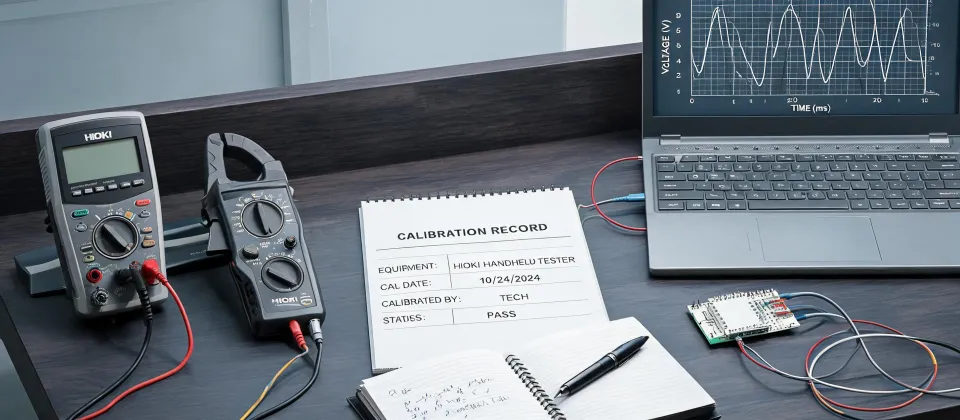
Fair question. And the answer isn't as simple as "you get what you pay for." I'm going to break it down the same way I break it down when my own team asks: a direct comparison between Hioki instruments and budget alternatives, across four dimensions.
- Purchase price
- Total cost of ownership over 5 years
- Support, calibration, and vendor legitimacy
- Accuracy and safety
One of those dimensions doesn't go the way you'd expect. That's the one that changed my mind.
Dimension 1: Purchase Price—Budget Brands Win, No Contest
Let's not pretend otherwise. If you're only comparing sticker prices, the budget option wins every time.
A basic clamp meter from a lesser-known brand costs $30 to $60. A no-name digital multimeter can be found for under $25. A Hioki clamp meter, by contrast, typically goes for $150 to $350 depending on the model. Hioki multimeter prices usually land between $130 and $400 at authorized distributors. That was accurate as of Q4 2024, and the market changes fast, so verify current rates before setting a budget.
So on day one, the budget tools cost 70 to 85% less. If I ended the comparison right there, you'd know exactly which way this article goes.
But I don't end there. Because I've spent 5 years watching what happens to these instruments after day one.
Dimension 2: Total Cost of Ownership—The Result That Surprised Me
Here's where my spreadsheet changed my opinion. I've tracked 30+ handheld instruments—multimeters, clamp meters, insulation testers—purchased between 2020 and 2024.
In 2021, we bought 10 budget clamp meters at an average of $45 each. Total: $450. By mid-2023, 7 of the 10 had failed in some way: cracked leads, flickering displays, one that started reading AC voltage inconsistently. The 3 survivors weren't within their stated accuracy anymore—our calibration station caught them.
Same year, we bought 5 Hioki clamp meters at an average of $240 each. Total: $1,200. As of this writing, all 5 are still in service. Two went through routine recalibration in 2024, and that's it.
Add it up. The budget instruments cost $450 upfront, then roughly $300 in replacements, plus untracked labor for troubleshooting every time readings seemed off. Total direct cost: about $750. The Hioki instruments cost $1,200 plus $180 in calibration—$1,380 in total. That's not as lopsided as people expect. But then you add the money we lost to downtime caused by unreliable measurements, and the budget option isn't even close.
Here's one example. In 2023, an encoder failed on a packaging line. The original part was a DBS60 encoder from SICK. A maintenance supervisor, pushing hard on a cost-savings initiative, replaced it with a compatible budget encoder at 40% of the price. It worked fine for 8 months. Then it died mid-shift, and we lost 3 hours of production. At our line rate, that's roughly $4,000 in lost output. The $180 we saved on the encoder turned into a $4,000 problem.
People assume the lowest quote means the vendor is more efficient. What they don't see is which costs are being hidden or deferred. The invoice doesn't show you the failure report you'll write 18 months later.
Dimension 3: Support, Calibration, and Legitimacy
In 2024, our QC lab asked for a new inspection microscope. A supplier was offering a Zeiss model at 30% below the usual street price, which immediately made me suspicious. Before I approved the purchase, I typed a very specific search: "is microscope world an authorized zeiss dealer." I run that kind of verification on every significant purchase now. Early in my career, I bought from an unauthorized reseller once and lost the warranty when the unit failed. It cost me once, and I've never skipped that check since.
In this case, I cross-checked the manufacturer's official dealer directory as well. The authorization wasn't verifiable through official channels, and for an $8,000 piece of lab equipment, "unverifiable" is the same as "no." I passed on the deal and bought through an authorized channel at full price. More expensive upfront, yes. But the microscope came with a real warranty, a factory calibration certificate, and a human being to call when it needed service.
The same logic applies to electrical test tools:
- Hioki through an authorized distributor: 3-year warranty, calibration certificates traceable to recognized standards, access to factory repair and support.
- Budget multimeter from a marketplace listing: a box. No calibration data, no support infrastructure. If the readings drift, you won't know until something breaks.
This is the dimension where the budget option doesn't just lose—it doesn't compete on the same plane.
Dimension 4: Accuracy and Safety—The Ones You Can't Negotiate With
Let's talk about specs, because this is where marketing gets people into trouble.
A typical budget digital multimeter specs basic accuracy at 1.5% to 2.5% for voltage readings. A mid-range Hioki multimeter specs at 0.5% or better. That sounds minor until you're measuring a 24V DC signal that's actually sitting at 23.2V. The cheap meter might tell you 23.5V. The Hioki tells you 23.2V. In an industrial control system, that difference determines whether you swap a sensor or recalibrate it.
Safety is a bigger issue. Test instruments carry CAT ratings under IEC 61010-1. Genuine CAT III or CAT IV equipment is designed with proper insulation, creepage distances, and overvoltage protection for real-world electrical environments. Budget tools often have CAT ratings printed on the side without ever being tested against the standard. When someone is measuring a live 480V panel, that's not a detail to get wrong.
Our quality control department learned the same lesson with digital height gauges. The budget model was 40% cheaper, but its repeatability spec was ±0.02 mm versus ±0.005 mm on the gauge we actually bought, and it had no calibration certificate. For QC measurements that go into customer reports, that wasn't an option. The expensive gauge was the right call.
People think paying more for equipment is about ego or brand loyalty. The reality is it's about risk. Sometimes a wrong measurement costs far more than the tool itself.
So What Should You Actually Buy?
I'm not going to tell you that you need a drawer full of premium instruments. That would be bad procurement advice.
Buy budget equipment when:
- You use it a few times a month or less
- The measurement isn't safety-critical
- It stays on a bench, not in a live electrical panel
- A wrong reading won't cascade into a bad decision
- You can treat it as disposable and replace it in 1–2 years
Buy Hioki—or something of equivalent quality—when:
- You use it daily for professional work
- You work in CAT III or CAT IV electrical environments
- Readings go into quality reports or customer deliverables
- You're troubleshooting intermittent faults or doing power quality analysis
- The cost of being wrong exceeds the cost of the instrument
My general rule after 7 years of tracking every invoice: if a tool gets used more than 50 times a year, buy quality. The total cost of ownership almost always favors it. If it's a spare that lives in a drawer, a budget tool might be fine—but treat it as disposable and never trust it for anything that matters.
And the authorized-dealer question applies well beyond microscopes. Whether you're comparing Hioki multimeter prices, sourcing a digital height gauge, or hunting for a replacement encoder for a DBS60, the check is the same: can this supplier back the product with warranty, calibration, and support? An unauthorized listing saves 15 to 30% upfront. In my experience, that's a gamble that doesn't pay off more often than it does. Don't hold me to an exact statistic, but roughly 4 times out of 5, we ended up paying more in the long run.
The numbers said to buy the cheap meters. My gut said otherwise. Five years of data later, the data backed up my gut. That's the comparison I wish someone had shown me back in 2020.
This analysis reflects our purchasing records through Q4 2024. Prices and product lines change fast in this industry, so verify current pricing before you decide. And if you're doing safety-critical electrical work, please don't base that decision on the cheapest listing you can find.