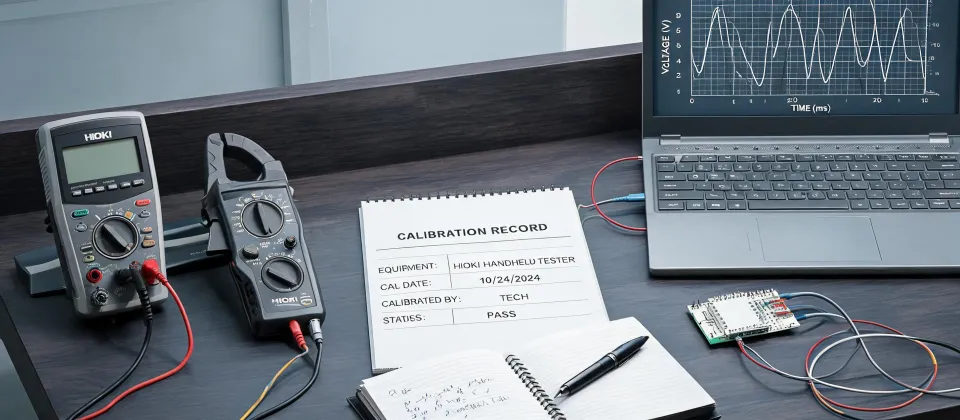
As an office administrator for a 160-person engineering firm, I manage all testing equipment orders—roughly $120,000 annually across 15 vendors. When our old power quality analyzer started giving inconsistent readings, I faced a decision I’ve made a hundred times: repair or replace? This time, it was more complicated because we also needed an insulation tester, and I had a stack of multimeters that were due for service. So I drew up a side-by-side comparison. On one side: repairing the existing units, including a search for “multimeter repair near me.” On the other: buying new instruments from Hioki, specifically the Hioki 3196 power quality analyzer and the Hioki IR4053-10 insulation tester.
The comparison framework was straightforward. The check: upfront cost, total cost of ownership, and transparency of the vendor. In that order. (Because, honestly, the last thing I want is a vendor that quotes one number and then shows up with a different one.) Here’s what I found.
Dimension 1: Sticker Price vs. Real Price
The repair quotes looked tempting. A local shop said they’d fix the old analyzer for $480, and a quick search for “multimeter repair near me” gave me quotes ranging from $75 to $150 per multimeter. The new Hioki 3196, meanwhile, carries a much higher price tag—think thousands of dollars. The Hioki IR4053-10 is also a significant investment compared to the repair cost of a clunky old insulation tester.
But then I looked closer. The repair quote didn’t include calibration. Another $350 for the analyzer, $60 per multimeter. Shipping, handling, and a two-week turnaround were also “extra.” When I compared the repair quote and the calibration cost side by side, I finally understood why the details matter so much. The repair was $480; calibration was another $350. Plus we’d have to ship it and wait two weeks. That’s not a repair—that’s an expensive temporary solution.
Bottom line: the sticker price was about a third of the new Hioki price, but the real cost (i.e., the total amount we’d pay before the instrument was ready for work) was closer to 80%—without any warranty or confidence in future reliability.
Dimension 2: The Total Cost of Downtime and Calibration
This is where my numbers got uncomfortable. While the old analyzer was out for repair, we’d have no power-quality monitoring on two active job sites. At $150/hour for an engineer’s time, even a week of downtime effectively costs $6,000. That’s more than the price of a new analyzer. Plus, repaired instruments almost never come with a fresh calibration certificate that meets IEC standards. The Hioki 3196, on the other hand, includes documentation and a full calibration schedule.
The same logic applied to the insulation tester. The Hioki IR4053-10 isn’t just a replacement; it’s an upgrade that gives us consistent reading reliability. The old unit’s readings had started drifting, which we discovered during a routine calibration. Repairing it might have brought it back to spec, but for how long? Honestly, I’m not sure why some repair shops don’t include calibration in their quotes. My best guess is they assume you don’t need it, or they want the initial number to look low. Either way, it’s a red flag.
So when I ran the numbers, “cheap” repairs were actually the more expensive path. The new instruments paid for themselves in avoided downtime and calibration hassles. It felt counterintuitive—I like to stretch budget—but the math was clear. Part of me still wishes we could have saved money by fixing the old gear. Another part remembers the time a hastily repaired unit failed mid-project, and that’s not a risk I’m willing to take again.
Dimension 3: Trust and Transparency
Here’s where the choice became obvious. One repair vendor claimed they could “restore the analyzer to original specs” for $480. But when I asked for a formal quote with calibration, RMA terms, and a warranty, they went silent. Those follow-up questions—the ones that cost nothing—separated the professionals from the amateurs.
Per FTC guidelines (ftc.gov), claims like “fixed to manufacturer specs” have to be truthful and substantiated. A handwritten note saying “works fine” doesn’t meet that bar. I’ve learned to ask “what’s NOT included” before “what’s the price.” The vendor who lists all fees upfront—even if the total looks higher—usually costs less in the end. This is also why I check references and invoicing capability before placing any order; in 2021, a low-priced repair shop couldn’t provide a proper invoice, and finance rejected the expense report. I ate $350 out of the department budget. Since then, transparency is non-negotiable.
This also reminded me of a similar debate about measurement tools in our machine shop. People often ask, “where are Starrett calipers made” before deciding whether to trust them. But what matters is whether the manufacturer maintains tolerance standards and provides proper documentation, not just the label on the box. Hioki’s instruments are made in Japan, and the calibration certificate tells you more than the factory location ever will.
I also had a weather station that needed repair, and the quote was suspiciously low—until I realized they’d only replace the sensor, not the data logger, which was the actual problem. That would’ve been a classic “cheap fix” that left us with a nonfunctional system. (So glad I asked for the detail breakdown before sending the PO. Almost approved it, which would have meant a second service call and more downtime.)
What I’d Choose Now
If the existing equipment is relatively new—under five years old—and the repair shop provides a transparent quote with calibration and warranty, repairing can make sense. That’s what we did with our multimeters: we found a certified shop, received a clear line-item quote, and the total cost was about half of replacing them. But if you’re dealing with a 10-year-old analyzer, a drifting insulation tester, or a repair quote that conveniently forgets calibration, replace it. That’s the scenario where buying the Hioki 3196 or IR4053-10 is a no-brainer.
I ended up purchasing both Hioki units, and we still regularly use our repaired multimeters for basic checks. But for critical measurements, I’m not taking chances with a hand-waved “good as new” promise.
The bottom line? The upfront price is just the beginning. When you compare repairs vs. new instruments, include downtime, calibration, and trustworthiness in the equation. And if a vendor gets defensive when you ask for all the costs up front, that’s the biggest red flag of all.