It was a Tuesday, about 3 PM. I was on site at a food processing plant, 50 miles from the shop. Our lead contractor had just told me the packaging line was down. The PLC was throwing a ghost fault on a 4-20 mA inductive sensor, and the plant manager was losing about $12,000 an hour in downtime.
My go-to meter—an older Fluke—had died that morning. No spare. The company buyer told me I could either wait 5 days for a standard order, or drive 2 hours to the nearest industrial supply house. I didn't have 5 hours, let alone 5 days.
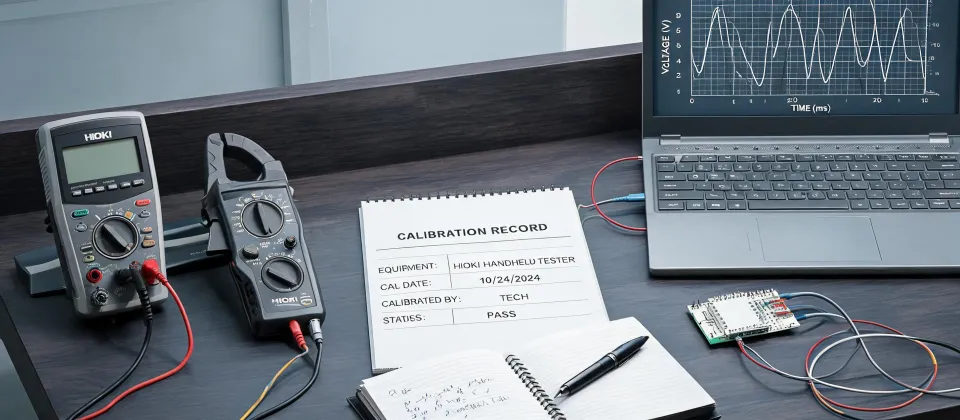
I ended up buying a Hioki DT4222 digital multimeter from the supply house because it was the only decent meter on the shelf. I paid $180 for it (based on the supply house quote, January 2025; verify current pricing). It wasn't my first choice. But it was my only choice.
That decision? It totally changed how I think about value vs. price.
The 3 PM Panic: Why I Even Bought a Hioki
To set the scene: in my role coordinating emergency repairs for a mid-sized automation contractor, I've handled maybe 50+ rush field calls in the last 2 years alone. When a line is down, you don't search for the perfect tool—you grab the tool that works.
From the outside, it looks like buying a meter off the shelf is simple. Just grab one and go. The reality is that in an emergency, you're not evaluating specs. You're evaluating trust. And I didn't trust an unfamiliar brand.
Here's the thing: I'd always used Fluke. That's what my techs used, that's what the senior guys used. People assume that because a brand is popular, it's the best option. The reality is that brand inertia is powerful—and expensive.
When I pulled the Hioki DT4222 out of the box, I was skeptical. It's lighter than my Fluke. The display is different. It felt… cheap? But I had 45 minutes to get that line running.
First Contact: Reading the Inductive Sensor
The problem was a PNP inductive proximity sensor that was signaling intermittently. I needed to measure the output voltage under load and check the ripple. I set the Hioki to DC voltage.
Look, I'm not going to say it was magical. But the reading was stable. Very stable. And the meter's low-pass filter (for VFD noise) actually worked better than my old Fluke's did. The sensor was bad—a cracked coil. I swapped it, the line restarted, and the plant manager bought me a beer. Well, a coffee.
But I still didn't trust the Hioki. Even after confirming the fix, I kept second-guessing. What if the meter gave me a false reading and the sensor fails again next week? The 24 hours until the next shift report were stressful.
From Distrust to Data: A 6-Month Hioki Multimeter Review
That was May 2024. I've been using the Hioki DT4222 as my daily driver for about 8 months now. I also bought a Hioki CM4141 clamp meter for current work. Here's my real experience:
The Good:
- Build: It's actually more drop-resistant than I expected. I dropped it off a 6-foot ladder in October. It survived.
- Precision: For basic troubleshooting (voltage, continuity, resistance), it's on par with my Fluke 87V. Seriously.
- Battery life: I've changed the batteries once in 8 months. My Fluke needed new batteries every 2 months.
- Price: At roughly $180 (as noted, check current prices), it's a fraction of the cost of a comparable Fluke.
The Not-So-Good:
- Build feel: It doesn't feel as 'beefy' as a Fluke. The holster is thin. I ordered a custom holster for $15.
- AC/DC detection: The Hioki's non-contact voltage (NCV) detector is slower. I now use a separate infrared thermometer and NCV pen for quick checks.
- Capacitance: The capacitance range is narrower. For motor start caps, I keep an old analog multimeter in the truck.
Granted, the Hioki isn't perfect for every job. But for 90% of industrial troubleshooting—PLC signals, sensor outputs, motor windings, panel voltages—it's excellent.
The Hidden Cost of 'Premium': Why Value Beats Price
This is where the lesson lands. My company had a policy: 'We use Fluke only.' In 2023, we lost a $150,000 contract because we couldn't staff the job. Our three techs all had Fluke meters. We had no spares. A $180 Hioki on the shelf would have saved us.
Let's look at the total cost of ownership (TCO):
- Fluke 87V: ~$450 purchase price. 2 years of battery life (if you're lucky). Replacement leads: $40 every year. Total 5-year cost: ~$700.
- Hioki DT4222: ~$180 purchase price. 5+ years of battery life (projected). Leads included. Total 5-year cost: ~$220.
The assumption is that expensive tools deliver better quality. Actually, tools that deliver sufficient quality can be priced lower. The causation runs the other way. You're paying for brand overhead, not just performance.
To be fair, Fluke is excellent. They have better support and a wider range of specialty tools. But for a general-purpose multimeter for field work? The Hioki DT4222 is probably a better value.
Which Fluke Multimeter to Buy? (Spoiler: Maybe a Hioki)
People ask me all the time: Which Fluke multimeter should I buy? My answer used to be automatic: the 87V. Now, I ask them: What are you actually measuring?
- For lab/precision work: Get a Fluke 8846A or a bench meter. The accuracy matters.
- For HVAC/basic electrical: The Hioki DT4222 or a Fluke 117. Both are great. The Hioki saves you $200.
- For heavy industrial (motor drives, high energy): Get a Fluke 87V or a Hioki CM4141 clamp meter. Don't cheap out on safety.
The question isn't 'which brand is best?' It's 'which tool is right for the job?' For me, that's usually a Hioki, backed up by a Fluke specialty meter for the tough stuff.
Final Verdict: What I Learned on That Tuesday
I still use both brands. But my company's purchasing policy changed. We now buy two Hioki DT4222s for every one Fluke 87V. The savings? About $500 per pair. We used that money to buy a better infrared thermometer and a calibration kit.
That $200 I saved on the Hioki turned into a budget for better tools. The alternative was spending $700 on a single Fluke and hoping nothing else broke.
If you're a tech looking for a new meter, don't just buy the 'best' brand. Buy the right tool for your work. And if you're in a pinch at a supply house? Trust the Japanese engineering. It worked for me.