Bottom line: if you’re buying test instruments on sticker price alone, you’re already behind. I’d argue the cheapest quote is usually the most expensive one, once you count what’s missing. That’s not a sales pitch. It’s a budgeting reality I’ve learned over six years of managing procurement for a 40-person water and wastewater instrumentation company.
I’ve handled about $90,000 in annual test-equipment spending, processed more than 1,200 purchase orders, and built a cost-tracking spreadsheet that my team jokes is my “third child.” The pattern is consistent: low bid wins, hidden costs surface, and operations eats the difference.
The Quote That Looked Like a Steal
A few years ago, a supplier quoted a “complete” clamp meter package for $300 less than any other bid. I was about to approve it when I decided to ask one question: “What’s not included?” The answer: carrying case, calibration certificate, and the current transformer adapter for our larger conductors. I said “complete package.” They heard “meter and test leads.” Result: $480 in add-ons, plus a $75 rush fee.
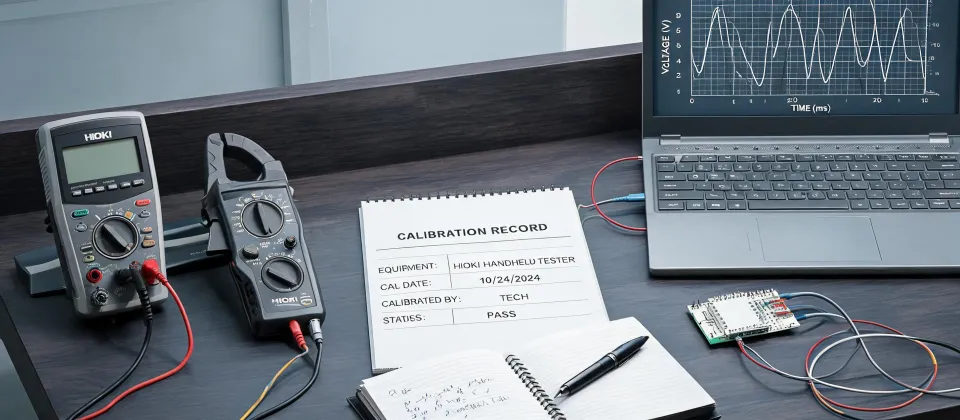
That “save” ended up costing us $555 more than the $300 discount—and it still was not the meter we needed for the job. The quote we passed on was for a Hioki 3280-10F clamp meter, which we later bought anyway with the calibration cert included. That was the day I stopped comparing price tags and started comparing total cost.
After the third time a quote arrived missing a key accessory, I built a checklist: meter, leads, probes, calibration certificate, manual, case, software, shipping. I should have done that after the first time, but now it’s non-negotiable.
Cheap Is Not the Same as Affordable
People think expensive vendors deliver better quality. Actually, vendors who deliver quality can charge more. The causation runs the other way. A vendor with transparent pricing and clear specifications usually has fewer surprises. A vendor who hides costs has to compete somewhere—and that somewhere is usually your invoice.
In my opinion, transparent pricing is not just a nice-to-have. It’s the foundation of trust. Per FTC guidelines (ftc.gov), advertising claims must be truthful, not misleading, and substantiated with evidence. I use that same standard for every quote I review. If the quote says “complete,” the complete system should be complete. If the spec sheet says “includes software,” the software should be in the box.
Even USPS publishes its rates with effective dates—a First-Class Mail letter is $0.73 as of January 2025. If the postal service can spell out a stamp price, a test equipment vendor can tell you whether the calibration certificate is included.
Specifications Are the Price in Disguise
The way I see it, a spec sheet is a financial document. It tells you what you can do with the instrument, where it will fail, and how much it will cost you when it does. That’s why I spend more time reading Hioki IM3536 LCR meter specifications than I do looking at the price column. The IM3536’s 4 Hz to 8 MHz frequency range and 0.05% basic accuracy tell me whether it can handle our component testing without false failures. If those numbers aren’t in the quote, the quote is incomplete.
Same story with the Hioki 3280-10F clamp meter. It’s a reliable workhorse for daily panel checks—but only if the jaw opening fits your conductors and the measurement range matches your loads. Specification details like True RMS reading versus average reading are not minor specs. They’re the difference between catching a harmonic problem and sending a technician back with a different meter.
The Same Pattern in Mag Flow Meters, Chromatography, and Water Meters
This isn’t limited to handheld instruments. It’s everywhere in industrial procurement.
Take a mag flow meter. The base quote looks great. Then you realize the grounding rings, mating flanges, and proper gaskets weren’t included. On one recent project, grounding rings alone added $320. The “cheap” flow meter suddenly wasn’t so cheap.
Or chromatography. A system quote might list the instrument and software, but not the analytical column, guard column, or vials. A lab manager I work with found that out on the first run. Column: $780. Standards: $240. Same story, different glassware.
Even something as simple as how to read a Sensus digital water meter can become a procurement headache. The meter can show flow totals, leak alerts, and reverse-flow flags. But if your original purchase didn’t include the communication module or the correct manual, your technician is staring at an LCD with no way to pull the data. A $300 module turned into a $1,500 service call because nobody asked, “What do we need to actually read this thing?”
But the Budget Says Cheap
I get it. Budgets are real. I’ve sat on the other side of the table with a finance director who said, “We just need the lowest bid.” To be fair, there are times when the low bid is the right call—one-off jobs, non-critical measurements, and spare units that might get used once a year.
But for anything that affects compliance, safety, or revenue, the lowest bid is often a red flag. Not because cheap vendors are dishonest, but because incomplete information is a risk you can’t price until it hurts. Granted, comparing full specifications and asking “what’s not included” takes more time. That’s the job.
When I compare quotes now, I use a TCO spreadsheet that includes accessories, calibration, training, and the cost of a failed field call. That spreadsheet has saved us roughly 17% of our annual instrument budget. No single discount did that. It was just the discipline of counting the costs nobody wanted to mention.
Transparency Is the Most Expensive Thing You Can Get for Free
So, bottom line: the vendor who shows you every number upfront—even when the total looks higher—usually costs less in the end. The hidden fees, the missing accessories, the vague specs, and the “you should have asked” conversations are the real cost drivers. I’d rather have a $4,200 quote that includes everything than a $3,900 quote that might, maybe, sort of, cover the basics.
That’s not a soft preference. It’s a procurement principle. If you ask me, it’s also the only way to make a defensible budget case when your CFO asks why the “cheap” option wasn’t chosen.
After six years of tracking invoices, I can tell you this: transparency builds trust because it respects your time, your money, and your intelligence. And in the long run, trust is the least expensive thing I’ve ever bought.