-
The $500 “Savings” That Cost Us $1,200
-
Total Cost of Ownership: What I Actually Use Now
-
How the Hioki 3196 Power Quality Analyzer Changed My Mind
-
Reading PQ3198 Reviews Reinforced the Same Lesson
-
Same Logic, Different Categories: C3-X, Extech, and Beyond
-
Even Pipette Tips Have a TCO
-
“We Don't Have the Budget” — The Objection I Keep Hearing
-
The Bottom Line
Here's an opinion that's earned me plenty of strange looks in the purchasing world: the cheapest test equipment on the market is usually the most expensive thing a company can buy.
I manage purchasing for a 300-person manufacturing company. That means I handle everything from office supplies to power quality analyzers — roughly 60-80 orders a year across 50 vendors, totaling around $400,000 annually. I report to both operations and finance, so I'm caught between two priorities: operations wants equipment that works, finance wants equipment that doesn't eat the budget. Balancing those two taught me more about procurement than any sales pitch ever did.
The $500 “Savings” That Cost Us $1,200
The vendor failure in March 2023 changed how I think about test equipment purchases. Our facilities team had been chasing intermittent voltage issues on the production line for weeks. They needed a power quality analyzer to diagnose the source. I did my standard routine: sent specs to four vendors, compared quotes, went with the lowest bidder.
That was a mistake.
The analyzer arrived two weeks late. No calibration certificate in the box — just a packing slip in a language nobody on our team could read. I emailed the vendor. No response for three days. I called. “We'll look into it.” Another week passed. Eventually a cert showed up, but our facilities lead pointed out it didn't reference the unit's serial number. Effectively worthless.
We used the unit anyway because the production line was still misbehaving and we were already three weeks behind.
The readings were inconsistent. It drifted out of spec within two months. Recalibration cost $350, and the unit was out of service for another three weeks.
Let me total that for you: $350 in recalibration, $680 in rush shipping for a backup unit, and roughly $1,700 in facilities team overtime spent working around the unreliable equipment. My “smart” $500 saving ended up costing us about $2,700.
The most frustrating part? The vendor never acknowledged any of it. You'd think written specifications would prevent these issues, but interpretation varies wildly between suppliers.
Total Cost of Ownership: What I Actually Use Now
After that debacle, I started calculating total cost of ownership (TCO) before comparing any vendor quote. It's not complicated. It just requires honesty about what you're really paying for:
- Base price — the number everyone compares
- Calibration and certification — does it arrive compliant, and what does recalibration cost?
- Accuracy and drift over time — when do readings become untrustworthy?
- Repair and downtime — what happens when it fails?
- Training and usability — a day to learn, or a week?
The cheapest quote almost always loses on every metric above the first one. I learned that the hard way.
How the Hioki 3196 Power Quality Analyzer Changed My Mind
After the budget analyzer disaster, I went back to the suppliers I trusted and asked what they'd actually recommend. Three of them, independently, mentioned the Hioki 3196 power quality analyzer.
I was skeptical — the quote came in about 25% higher than the budget option I'd bought before. But one supplier I'd worked with for a decade put it plainly: “You'll only buy one.”
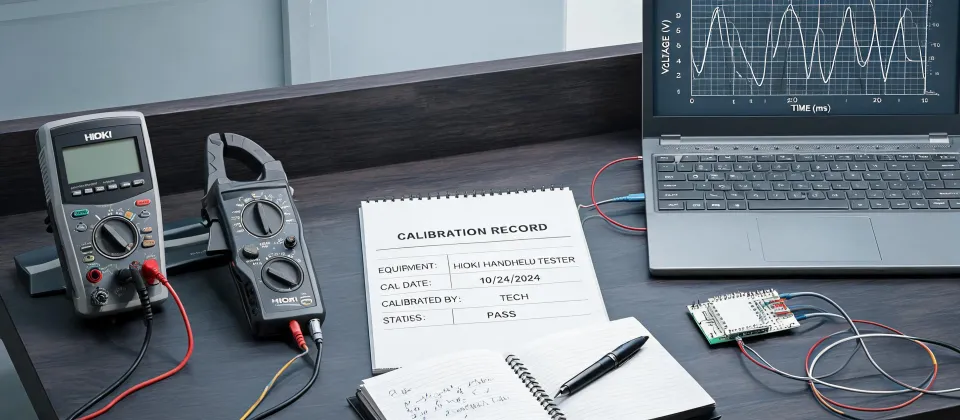
Three years later, that's exactly what happened. The Hioki 3196 power quality analyzer has been recalibrated once — normal cycle. It hasn't drifted. Our facilities team can operate it without cracking open the manual. It just works.
So glad I listened to that supplier. I almost went with another budget vendor to save $200 on the initial order. That would've been a second failure on my hands, and my VP would've had every right to question my judgment.
Is a power quality analyzer an exciting purchase? Not even slightly. But never having to reorder it, never explaining to my VP why something we bought two years ago is already failing — that's worth more than the price difference, and then some.
Reading PQ3198 Reviews Reinforced the Same Lesson
When we started planning our next monitoring upgrade, I dedicated a serious chunk of time to reading hioki pq3198 power quality analyzer reviews — the real ones, from maintenance managers and electrical engineers, not marketing pages. The pattern was consistent: people complained about the upfront cost, then admitted they never regretted it a year later.
One review from an electrical contractor summed it up better than any spec sheet could: “I've bought cheaper analyzers throughout my career. Every single one cost me more in the long run. The PQ3198 is the first instrument where I don't second-guess the readings.”
That mirrors my experience exactly. When you use a tool every day, you stop noticing the premium and start noticing everything that never goes wrong.
Same Logic, Different Categories: C3-X, Extech, and Beyond
TCO thinking isn't just for big-ticket items. I use it everywhere now.
Take thermal cameras. Our maintenance team requested the C3-X compact thermal camera for electrical panel inspections. The cheaper alternatives had lower resolution, which seemed acceptable on paper. The maintenance lead pushed back: with a low-res camera, you miss hot spots until they fail. The C3-X caught two failing breakers in its first month on site. Two unplanned shutdowns would've cost us considerably more than the camera's premium price.
For building inspections, I spent time researching how to use the Extech moisture meter before purchasing it. Understanding measurement depth and how different materials influence the readings is the difference between a useful tool and a gadget that gives you random numbers. The Extech unit delivers consistent readings across surfaces. Our building maintenance team actually trusts the data. (The budget alternatives? Not so much, but that's a separate story.)
See the pattern? The cheap option wasn't really cheaper in any of these cases.
Even Pipette Tips Have a TCO
Here's where TCO gets really boring: pipette tips.
Our quality lab goes through thousands of pipette tips a year. You wouldn't think there's much to it — they're plastic tips. But we discovered the hard way that pipette tips compatibility with our specific pipettes matters more than price per box. Incompatible tips mean inconsistent sample volumes. Inconsistent volumes mean repeated tests. Repeated tests mean wasted labor and materials.
I now verify pipette tips compatibility before any lab consumables order. It takes two minutes and saves us hundreds of dollars in wasted work. TCO thinking, applied to a product that costs pennies per tip.
“We Don't Have the Budget” — The Objection I Keep Hearing
Finance pushes back on almost every purchase decision I make. The conversation always goes the same way:
“The cheaper option is $2,000 less. Why are we spending more?”
It's a valid question. But it's the wrong question.
The right question is: what's the total cost of this purchase over the next five years?
If the cheap instrument fails in two years, you're buying two instruments in the same period. If the readings are unreliable, you're making decisions on bad data. And bad data drives bad operational decisions that cost a lot more than any test instrument.
In Q3 2024, I ran a five-year TCO comparison for our finance team across our major instrument purchases. The higher-priced option came out with the lower total cost in four out of five categories. The one exception was a category where the cheap option genuinely was sufficient, and we still buy the cheap option today.
TCO thinking isn't about buying premium for the sake of it. It's about buying what actually costs the least over time. Sometimes that's the most expensive option. Sometimes it isn't. But you'll never know the difference if you only compare sticker prices.
The Bottom Line
After five years in this role, one lesson overrides everything: the sticker price is the least useful number on any quote.
The Hioki power quality analyzer looked expensive at first. It's been the most economical instrument we own. The C3-X compact thermal camera was worth every penny. The Extech moisture meter gives us data we can act on. And our lab stopped wasting time and material on incompatible pipette tips.
I'm not telling anyone to ignore price. I'm telling you to calculate the real cost. Add up calibration, reliability, training, downtime, and the cost of being wrong. Then decide.
The number you get — not the quote — is the one that matters.