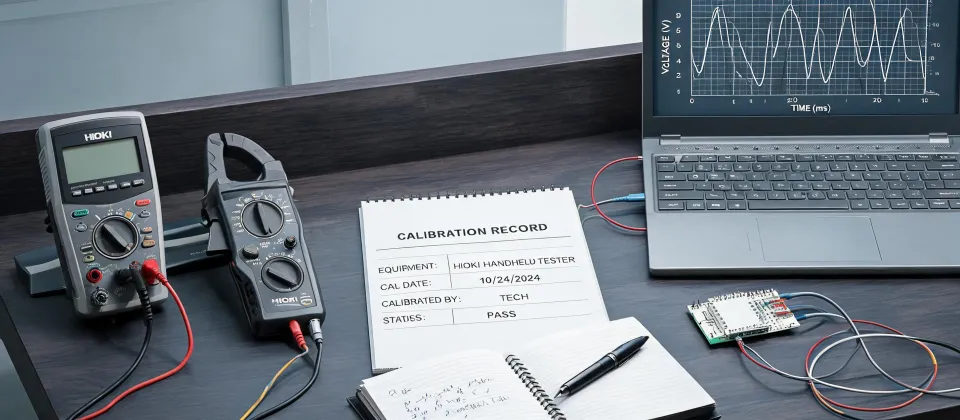
There's no single "best" test instrument for every job. If someone tells you there is, they've probably only used one brand. Over the past 6 years of tracking every invoice in our procurement system, I've learned the hard way that the cheapest option upfront can be the most expensive in the long run, and the most expensive brand isn't always the best fit. It depends entirely on your specific needs, volume, and technical requirements. Let me break it down by the three most common scenarios I see.
Scenario 1: The High-Precision Lab Environment
If you're running a calibration lab, R&D department, or quality assurance team that needs absolute precision, you can't afford to cut corners. I made this mistake in my first year when I tried to save $300 on an LCR meter for our product development team. The budget option looked good on paper, but within 3 months, we were seeing drift in measurements. That 'savings' cost us over $1,200 in rework and a delayed product launch.
For this scenario, the Hioki IM3536 LCR meter is a solid choice. It offers the precision and stability you need for critical measurements. According to Hioki's specifications, the IM3536 provides a basic accuracy of 0.05% and a measurement frequency range from 4 Hz to 8 MHz. When I'm evaluating instruments for our lab, I always check: does it have temperature compensation? Thermal drift is a killer in precision work.
The total cost of ownership here isn't just the purchase price. It's the cost of a bad measurement—the rework, the missed deadlines, the damaged reputation with clients. When we switched to a higher-grade instrument, our rework rate dropped by about 60%. That's not a guess; that's from our quality tracking system.
What to look for:
- Basic accuracy of 0.1% or better
- Temperature stability specifications
- Calibration interval and cost
- Software compatibility with your data systems
Scenario 2: The General Maintenance and Field Service Team
Now, if your team is out in the field troubleshooting electrical systems, your priorities shift. You need ruggedness, battery life, and ease of use. You don't need lab-grade precision, but you need reliability. I remember a specific instance in Q2 2024 when we switched vendors for our field clamp meters. We had been using a budget brand, and three units failed within the first year. The 'cheap' option cost us $450 in replacement units and lost technician time.
For field work, the Hioki CM4376 clamp meter is a strong contender. It's built to handle drops (up to 3 meters, per Hioki's specs) and has a broad current range. It also has a handy feature: it can measure up to 2000 A AC/DC, which covers most industrial applications.
I also see a lot of people asking about liquid chromatography systems in the context of field testing, but that's a different beast. For field electrical work, you're looking at power quality analyzers and insulation testers, not chromatography. That's a lab instrument. Just something to keep in mind when you're searching.
What to prioritize:
- Drop test rating (Hioki CM4376 is rated for 3-meter drops)
- IP rating for dust and water resistance
- Battery life (at least 10 hours of continuous use)
- Auto-ranging and data logging capabilities
Scenario 3: The Cost-Conscious Startup or Small Shop
I get it. When you're bootstrapping, every dollar counts. I've been there. The temptation is to go with the absolute cheapest option. But here's the thing: a $50 multimeter from a generic brand might work for a hobbyist, but if you're using it to verify safety on a 480V system, that's a risk I can't recommend. The cost of an accident is not just financial.
In this scenario, look for brands that offer a good balance of quality and price. Hioki's entry-level digital multimeters and insulation testers are priced competitively against the major brands, but they still carry the Japanese engineering reputation for reliability. For example, their DT4256 digital multimeter offers CAT IV 600V safety rating, which is critical for industrial environments, at a price point that's often below the big names.
Another area where I see small shops trying to save is on angle finders and other measurement tools. Honestly, for angle finders, the stakes are lower. You can get a decent digital angle finder for under $50. Don't overthink that one. But for electrical safety testers? Spend the money. That's not a place to cut corners.
And what about the question of how IFM sensors compare with Omron and Keyence? That's a different product category entirely—industrial sensors for automation, not electrical test instruments. So be careful about mixing up your categories. If you need sensors, that's a whole other buying process. If you need test instruments, stay focused on that.
How to Decide Which Scenario You're In
Here's a quick litmus test I use:
- What's the consequence of an inaccurate measurement? If it's rework or a delay, you're in Scenario 2 or 3. If it's a failed product launch or a safety incident, you're in Scenario 1.
- How often will the instrument be used? Daily use in a lab = invest. Monthly use in the field = balance. Occasional use for checks = budget carefully.
- Who is using it? Trained technicians can handle more complex instruments. New hires or temps might need something simpler and more rugged.
Don't just pick the cheapest option. Don't just pick the most famous brand. Look at your specific needs, calculate the total cost of ownership (including potential failure costs), and ask yourself: "Is the risk worth the savings?" More often than not, a mid-range instrument from a reputable brand like Hioki is the sweet spot. But your mileage may vary, and that's okay. What matters is that you make an informed decision.