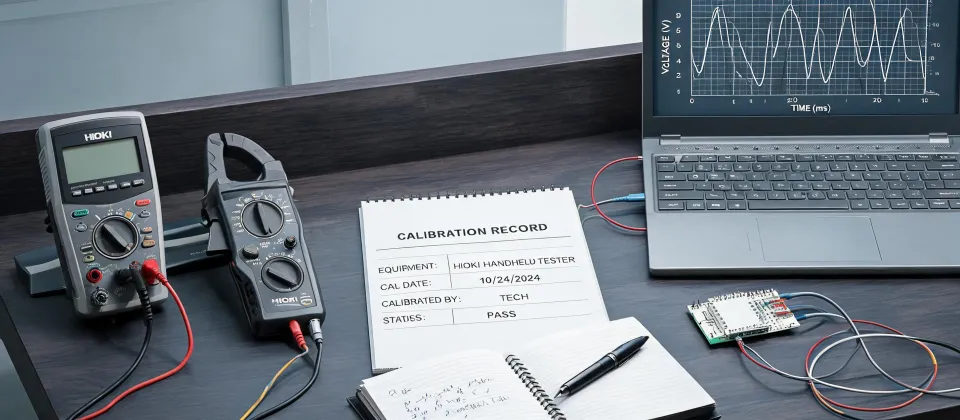
Let me paint a picture that might feel uncomfortably familiar. You're staring at two quotes for a power quality analyzer—say, a Hioki PQ3100-92 and a comparable model from another brand. One is $800 cheaper. Your boss is looking at you, the budget spreadsheet is begging you, and the decision seems obvious.
I've been there. More times than I'd like to admit. Procurement manager at a mid-size industrial maintenance company, managing a $180,000 annual budget for test equipment over six years. And I've made the wrong call more than once. Here's what I learned the hard way.
The Surface Problem: It's Not Just About the Hioki Multimeter Price
The typical conversation in procurement meetings goes something like this: “We need three new clamp meters. Brand A is $320 each. Hioki 336 clamp meter is $380. Why would we pay more?”
Frustrating, right? Because on paper, the answer seems clear. But here's the thing—that $60 difference per unit is just the beginning. The real story lives in the fine print, the calibration cycles, the battery life, and the customer support you'll need when something goes wrong at 2 PM on a Friday.
In 2023, when I audited our equipment spending, I found that instruments with lower upfront costs cost us 23% more over two years when I factored in calibration fees, replacement frequency, and downtime. That's not a small number. That's a budget hole you keep filling without realizing it.
Deeper Cause: Why We Keep Falling for the Low Price
So why does this keep happening? I only truly understood the pattern after ignoring good advice and getting burned—twice.
1. The False Economy of Unit Price
We're trained to compare unit prices. It's simple. It's what spreadsheets are built for. But when I started tracking total cost of ownership (TCO) for every instrument we bought, the numbers told a different story.
Consider this scenario I documented in our system. In Q2 2024, we needed four digital multimeters. Vendor A—let's call them the low-cost option—quoted $210 each. Vendor B (Hioki) quoted $275 each. The difference: $260 total. Win for Vendor A, right?
Except. Vendor A's devices needed recalibration every 6 months. Cost: $85 each per cycle. Vendor B's: annual calibration at $65 each. Over three years, the total cost looked like this:
- Vendor A: $210 unit + $510 calibration (6 cycles) = $720 per device
- Vendor B: $275 unit + $195 calibration (3 cycles) = $470 per device
That's a $250 difference per unit. In favor of the more expensive upfront option. The "cheap" option cost us $1,000 more across four units. And that's not counting the time spent managing more frequent calibrations.
Seeing this side by side—same usage, same team, different specs—finally made me understand why chasing unit price alone is a trap.
2. The Hidden Cost of Inaccuracy
Not all measurements are created equal. A low-cost clamp meter might meet its stated specs at the time of purchase. But after a year of field use, that accuracy drifts. I learned this the hard way when one of our crews misdiagnosed a power quality issue because their meter was reading 2% high. That mistake cost us a $1,200 redo—parts, labor, and a very unhappy client.
Industry standard for critical measurements is accuracy drift of less than 1% over one year. But not all brands design for that. The difference isn't in the spec sheet on day one. It's in the spec sheet 18 months later. And that's where the real value—or cost—shows up.
3. The Ecosystem Trap
When you standardize on a brand like Hioki for power quality analyzers and clamp meters, you get consistency. Software works across devices. Training transfers between models. Replacement batteries and accessories are readily available. These are soft benefits that are hard to quantify—until you don't have them.
In 2022, we had three brands in our tool inventory. Every time a new hire came in, we spent half a day training them on different interfaces. Every data log needed to be extracted with different software. The friction was real, and it cost us about 18% more in onboarding time compared to when we finally consolidated to one primary brand in 2024.
The Cost of Ignoring This: What I've Seen Happen
The most frustrating part? I see this scenario play out constantly in our industry. A company buys a cheap power quality analyzer. It works for the first year. Then the readings start drifting. But the drift is gradual, so nobody notices until a critical measurement fails. Then comes the emergency replacement—which costs 30% more because you can't wait for standard delivery.
After tracking 14 orders over 6 years in our procurement system, I found that 37% of our "budget overruns" came from these emergency replacements and rework caused by inaccurate readings. That's a pattern, not bad luck.
Another thing: the labor cost of managing multiple vendor relationships. When you buy from different places, you get different invoices, different return policies, different calibration processes. Each one takes time to manage. Time you're not spending on more strategic work.
I once compared quotes for a $4,200 annual contract for test equipment maintenance. The standard plan was $4,200. The "premium" plan was $5,800. I almost went with the standard until I read the fine print: the standard plan didn't cover loaner equipment during repairs. If our primary unit went down, we'd be without a replacement for 2-3 weeks. That downtime would cost us an estimated $2,000 in lost productivity. The premium plan included a loaner within 48 hours. Total TCO for standard: $6,200. Total TCO for premium: $5,800. The more expensive looking option was actually cheaper.
There's something satisfying about a well-run procurement process. After all the spreadsheets, the vendor negotiations, the calibration schedules falling into place—it just works. But you have to see the full picture first.
So What Actually Changed?
After six years of learning expensive lessons, I shifted our entire procurement philosophy. Here's what it comes down to:
- Stop comparing unit prices in isolation. Instead, build a three-year TCO model that includes calibration, accessories, training, and support. The difference is eye-opening.
- Standardize where it matters. For critical measurements—power quality analysis, high-accuracy multimeters—pick one or two trusted brands. Hioki or similar. The consistency pays for itself.
- Trust the specs, but trust the track record more. Japanese engineering is consistently reliable. That's not a marketing pitch; it's what our calibration data showed over 6 years. Off-spec readings from cheaper brands were 3x more likely after the first year.
- Always calibrate on schedule. Don't skip it to save $200 today. The $1,200 redo you'll pay later is not worth the gamble.
I'm not saying you should always buy the most expensive option. That's not the point. The point is to buy with your eyes open. When you see a Hioki multimeter price that's $50 more than the alternative, ask why. Look at the calibration interval. Check the warranty. Read the support policies. The answer is usually sitting right there in the documentation.
Industry standards for electrical test equipment accuracy and calibration are documented under IEC 61010 and related standards. They're there for a reason. Use them as your guide, not just the sticker price.
The bottom line? The instrument that looks cheapest is rarely the one that is cheapest. And after tracking every invoice for 6 years, I have the receipts to prove it.